Tianjin Xin'gang Maritime Safety Administration builds a distinctive safety lecture hall, reinforcing the collision prevention safety line for commercial and fishing vessels through multi-scenario training.
To solve the problem of "emphasizing theory over practical operation" in crew safety education and address the deficiencies in crew collision avoidance practices, recently, Tianjin Xingang Maritime Safety Administration has established a regular and characteristic safety classroom at the Tianjin Port Seafarers Service Station. They innovatively implement a multi-scenario teaching model and organize a series of practical training sessions on merchant and fishing vessel collision prevention, bringing practical and vivid safety training directly to the crew.
During routine inspections of crew performance capabilities, maritime law enforcement officers have discovered prominent issues such as some crew members on duty not having a solid grasp of collision avoidance rules, improper lookout duties, and insufficient ability to handle urgent situations. To address this safety hazard, Tianjin Xingang Maritime Safety Administration has moved away from the traditional single-classroom lecture model and has established a full-chain closed-loop training model of "learning onshore, testing online, and practicing onboard."
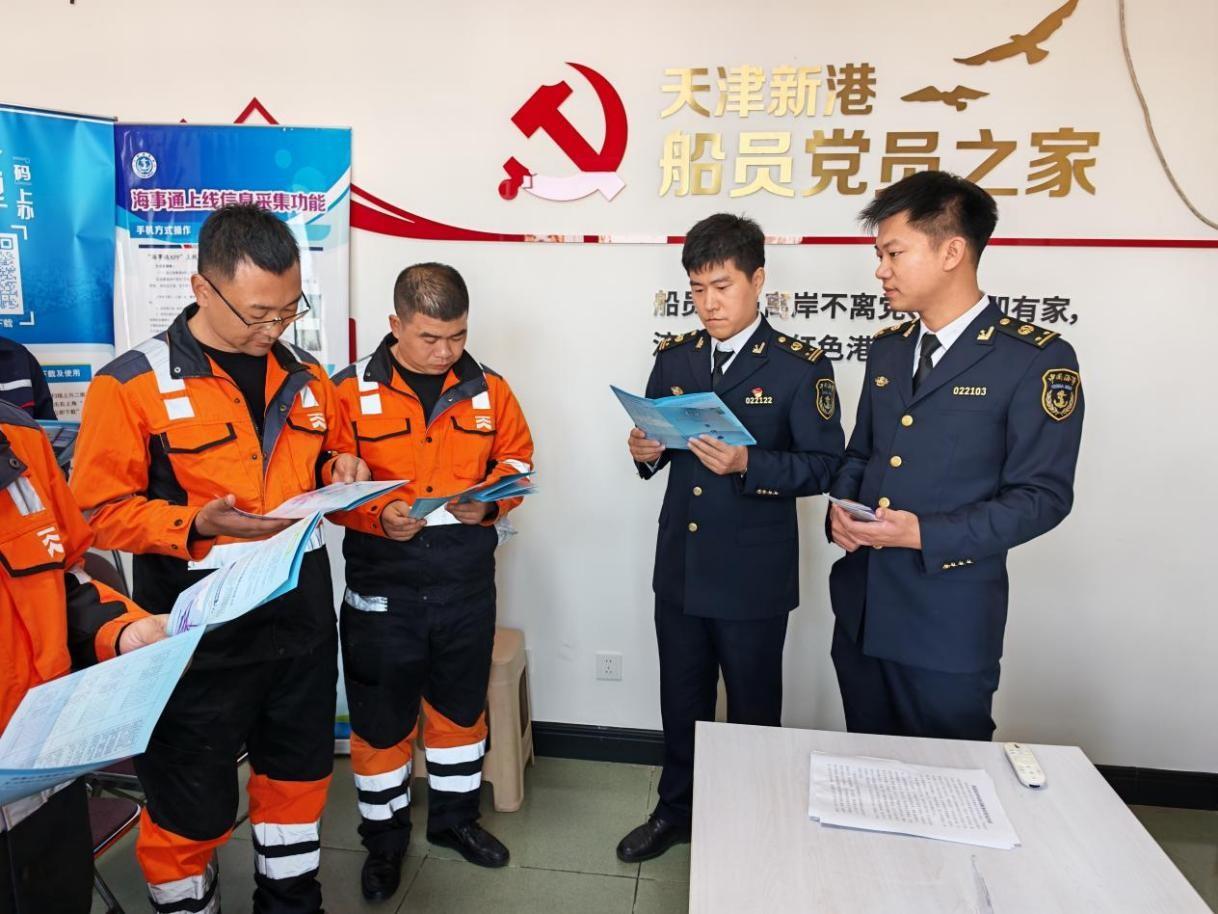
In the practical training classroom at the Seafarers Service Station, law enforcement officers conduct safety education based on typical cases of merchant and fishing vessel collisions, providing detailed explanations of practical requirements such as key points of navigation in fishing areas, collision avoidance rules, proper lookout, and standardized avoidance maneuvers. Supplementary pamphlets visually display collision avoidance precautions. After the theoretical lessons, the crew scans a code to participate in online evaluations, and targeted reinforcement training is provided for personnel with weak test results to ensure the safety training is substantive and that safety knowledge truly sinks in.
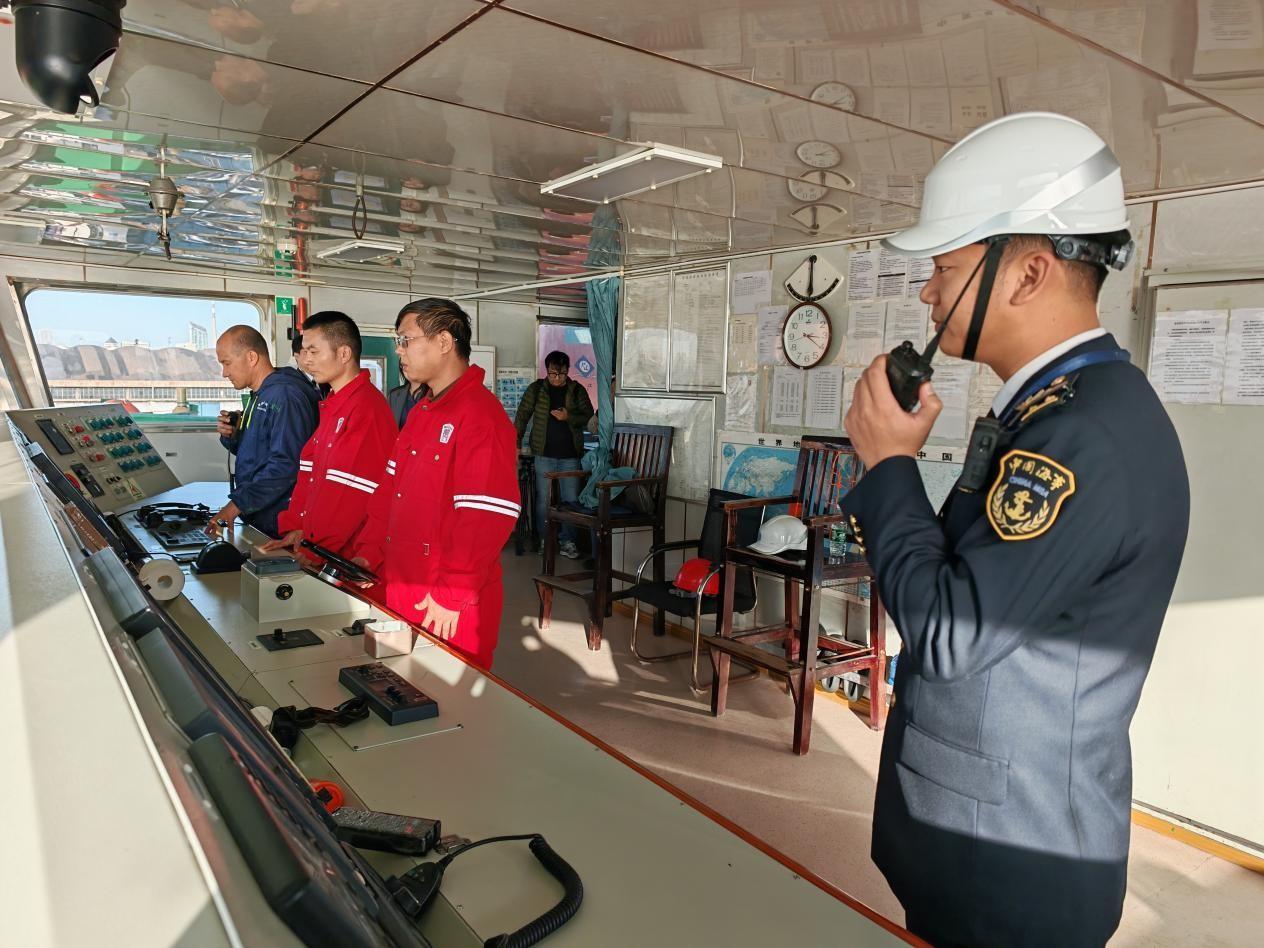
In the onboard practical operation session, law enforcement officers organize the crew to conduct real-world simulation exercises on the ship's bridge. Using navigation equipment like radar, AIS, and VHF, they simulate complex and urgent navigational situations in fishing areas. The exercises guide the crew through risk identification, high-frequency coordination communication, standardized avoidance, and emergency handling procedures in a step-by-step manner. This on-site testing of the crew’s emergency handling and cooperative abilities transforms the collision avoidance rules from textbooks into practical sea combat skills.
The initial phase of practical training has successfully completed all teaching tasks, and the multi-scenario practical training model has shown initial effectiveness. Moving forward, Tianjin Xingang Maritime Safety Administration will continue to leverage the safety classroom platform at the Seafarers Service Station. By considering the actual needs of the crew and maritime regulatory requirements, they will dynamically optimize course content, continuously enrich and expand training scenarios, and conduct themed practical collision avoidance training for merchant and fishing vessels in batches. This will enhance crew risk prevention and control capabilities, solidify the safety production responsibilities of shipping companies, and safeguard the waterway navigation safety of Tianjin Port.
-
Tianjin Xin'gang Maritime Safety Administration builds a distinctive safety lecture hall, reinforcing the collision prevention safety line for commercial and fishing vessels through multi-scenario training.3052
-
山东港口渤海湾港再添一条通往美洲的件杂货新航线。3019
-
Sea-rail intermodal "one-box" direct transportation to Wuhu Automobile Industrial Base4016
-
东海救助局海空力量救起14名海上遇险船员3071
-
从“心里没底”到“心里有谱”——交通运输部东海航海保障中心以数字化创新助力“商渔共治”3229